Search history



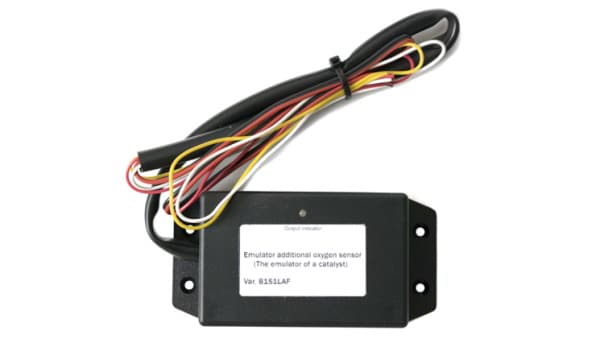
The device emulates the correct signal of the downstream (catalyst) O2 sensor by analyzing the signal of the front wideband lean-mixture sensor (Honda, Mazda, Nissan and many European cars), which allows you to check the serviceability and operation of the system's O2 sensors.
The emulator fully replaces the signal of the stock auxiliary O2 sensor responsible for monitoring catalytic converter operation, if the converter is not working efficiently, so that the system's O2 sensors can be checked for serviceability.
The device emulates the auxiliary O2 sensor by analyzing the signal of the primary (front, B1S1) lean-mixture sensor, the LAF sensor (used, for example, in Honda, Mazda, Nissan and European-made BMW, VW, Volvo, Audi and other cars). The device emulates the signals of 1-volt zirconium dioxide (electrochemical) sensors used for catalytic converter diagnostics (B1S2). The LAF sensor is a wideband sensor with a fairly high initial voltage offset (from 1.5 to 4.5 volts) on its three signal wires, unlike zirconium dioxide 1 volt O2 sensors and A/FRS sensors (Toyota, Lexus), which have only two such wires, not counting the heater wires.